

One machine to rule them all?
The search for the Holy Grail: Part 1

I’m often asked what sewing machine I recommend
My rather annoying and unhelpful answer is, “it depends”.
If we’re starting from Machine Zero, we want to get something we can afford which will do what we want it to do. Except, we don’t know what that is yet!
In a way, though, this is an easy one. If genuinely starting from zero, anything is better than nothing. If it works - by which I mean it forms a decent stitch and doesn’t chew up your fabric - job done.
But if we’re moving on from Machine One, looking for an alternative or perhaps a Machine Two…. that’s where the rot sets in.
For a start, why are we even looking? What do we think a new machine will give us?
I like to divide things into two camps: Essential to have and Nice to have. But essential for what? Well, that depends (you can see where this is going, can’t you!)
If you’d like to know what makes my list of Essentials and Nice-to-haves, download my handy checklist:
But before you trot off to the shops, there’s one very important question you need to ask:
What do you want to do with it?
Because of course, the more you do and the wider the scope, the more things you’ll be looking for in your perfect machine. To demonstrate how this plays out, let me justify describe the history of my sewing machine purchases over the years.
Machine One
The first machine I went out and purchased required but one essential feature to be an upgrade on my inherited old Singer (that I still have):
Does it have zigzag?
The next questions were simply,
Can I afford it?
Is it straightforward to use?
And so I bought a cheap, second-hand machine from a brand I was familiar with (Singer). Easy. At the time, I was doing occasional dressmaking, hemming curtains, and just starting to play with creating appliqué pictures.
But then I discovered there was a thing called ‘free-motion embroidery’. Overnight this machine went from perfectly adequate to lacking in essential features, namely
Drop teeth/feed dog
Free motion embroidery foot
After a temporary fix (using a screwdriver to remove the feed and stitching with a bare needle, not recommended) I purchased…
Machine Two
Soon after discovering the limitations of Machine One, I inherited a little something from my Granny. Seemed appropriate enough that the very first thing I treated myself to was a shiny, new and sparkling white sewing machine with ‘all the things’. Or so I thought.
It had the essentials:
Drop feed
Free motion foot
Zigzag
And some nice-to-haves
Buttonhole stitch and foot (for all those buttonholes)
Zipper foot (for all those zips…)
Pretty patterns to play with (this was new and very exciting)
Nice to look at (my first ever smooth, white, shiny machine)
Hard case
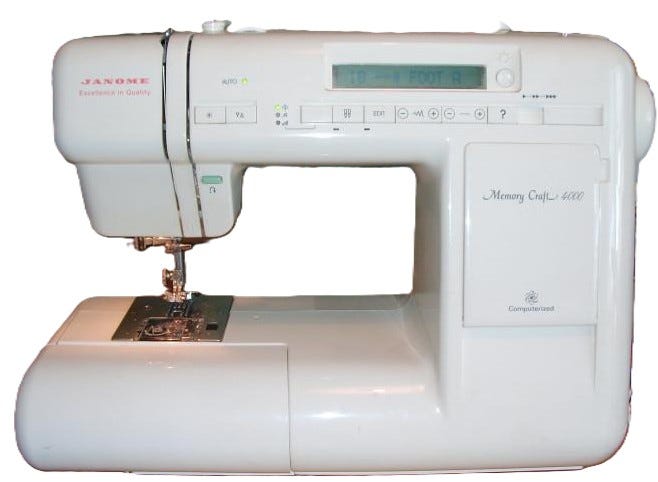
Armed with my lovely new machine, I set sail on my journey to learn all there is to learn about machine embroidery. And you can guess what happened next…
Pretty swiftly, I realised this shiny new machine with all the essential features, while still being perfectly good for doing the things I’d done before, like making clothes or hemming curtains, had some major drawbacks when I wanted to do new things like machine embroidery - especially free-motion embroidery.
Unfortunately, this will always be the way: you don’t know what you don’t know until you know, and then it’s too late.
When you’re doing a lot of something, anything - if you frequently need to do things that are mildly fiddly or vaguely annoying, other things you’d previously thought unimportant or didn’t know were even a thing, swiftly escalate from ‘nice to have’ to ‘essential’.
Admittedly, there was also a little bit of FOMO too, as it seemed everyone else in class had a Bernina. Of course they did.
Machine Three
So I upgraded my list and my machine. My essential features now included…
Flat extension table as standard: instead of a curved body, annoying when a hoop slips off
Easy to swap presser feet: instead of needing a screwdriver, boringly tedious
Dial to change stitch length and width: smooth and continuous change as you stitch instead of jabbing at buttons
Removable bobbin case with easily accessible screw: instead of fixed drop in
By a stroke of good fortune, my Mother-in-Law had just bought my husband a very nice new bike…and to even things out (or later blackmail, who can say) she offered to buy me a new sewing machine. So I chose a Bernina.
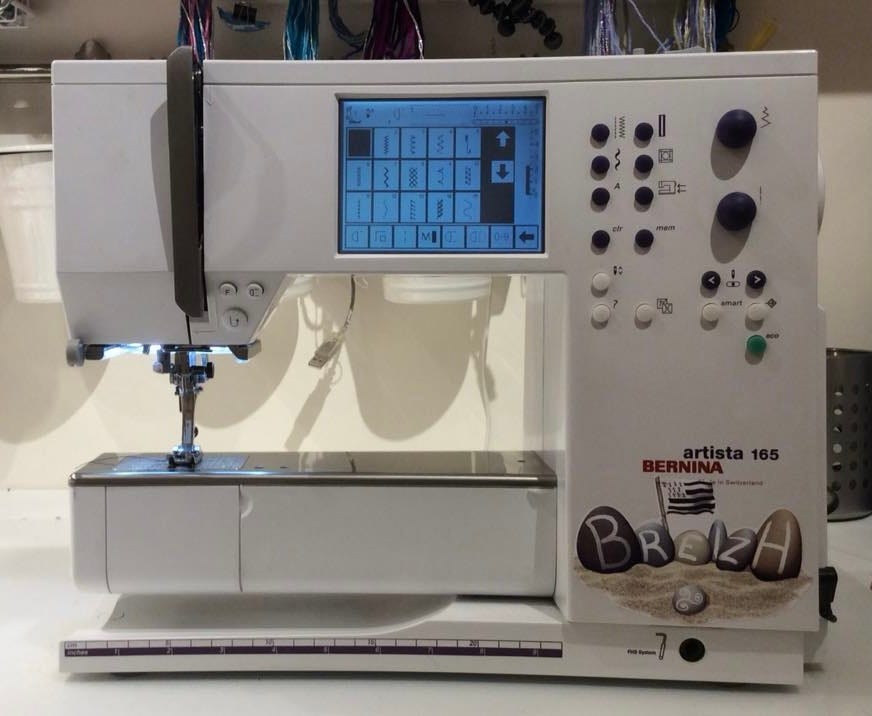
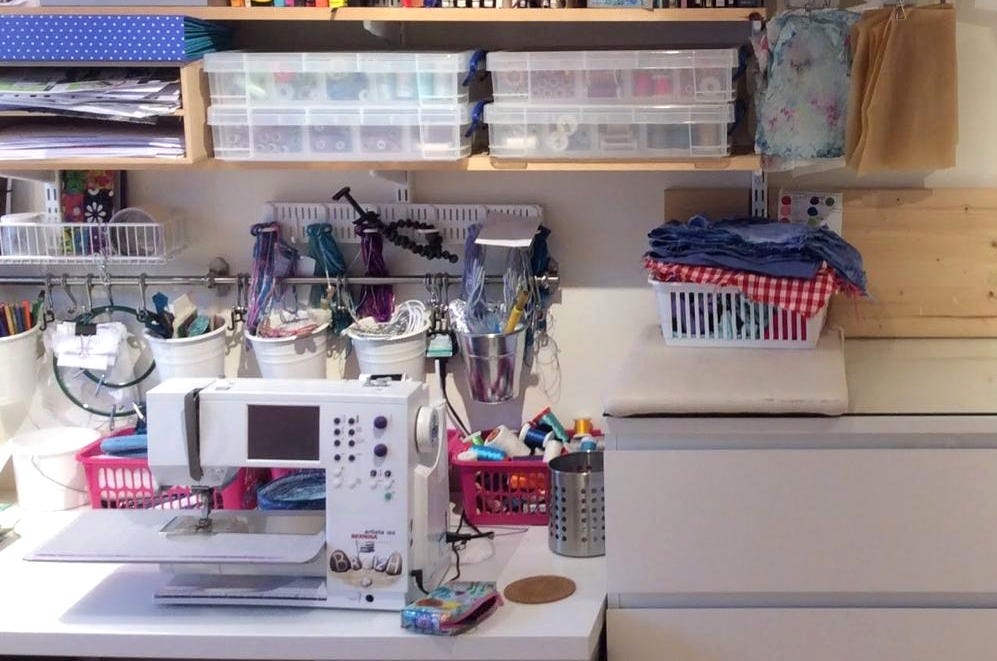
And quite frankly, that machine was perfect. Almost. It was heavy, and so perfectly super I was worried about damaging it by carting it out and about and in and out of the car, so I ‘had’ to purchase…
Machine Four
A second-hand, ¾ sized version of Machine Three. Slightly more cumbersome to use as it lacked dials and needed code numbers to change stitch patterns, but it had the flat machine bed and easy presser foot swap that are a standard feature of Bernina. It also used the same feet and bobbins as Machine Three so I could use both machines interchangeably. Very useful when starting something like a teaching sample at home – and carrying on in class. Just pop out the bobbin and take it with you.
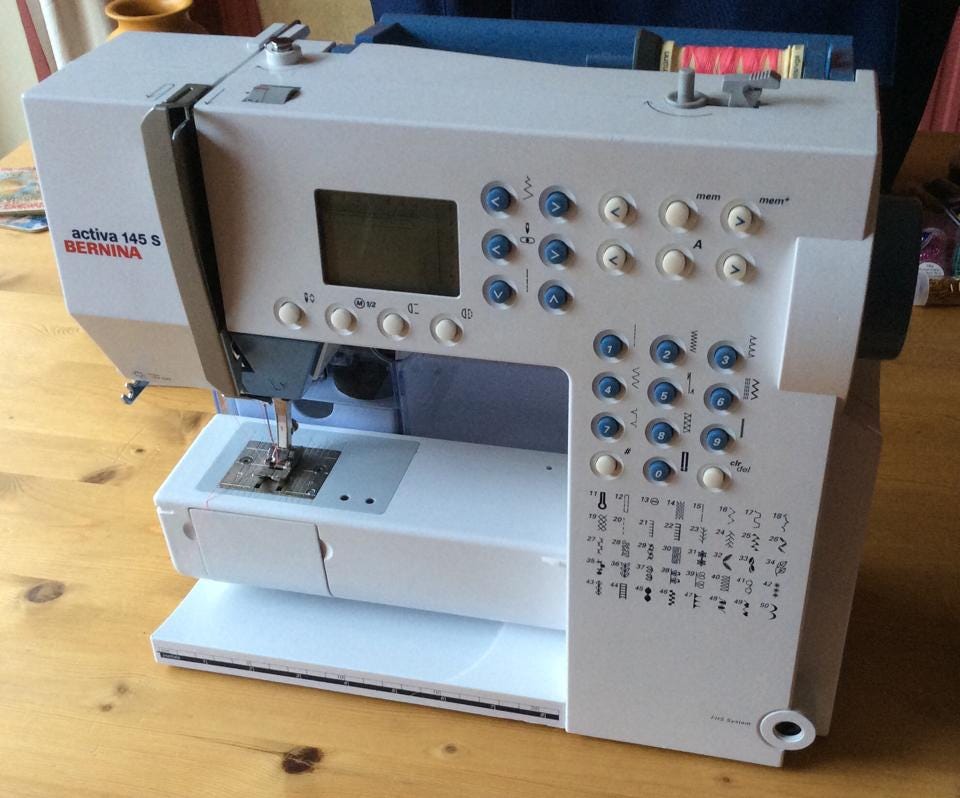
Machine Five
A second-hand vintage Bernina, bought partly for the cachet, partly to snag a bargain from a seller who didn’t use it (or appreciate what they had) but also for its robust simplicity and ease of transport to class. Ultimately, I admitted it was surplus to requirements and sold it to a student. About whom more later in Part Two, I taught them too well…
Machine Six
Tragic day, Machine Three, my favourite machine, died a death. The electronics were fried and despite circuit boards being replaced, it was determined to turn up its toes and expire. And so the hunt began, all over again.
This time, I knew exactly what I wanted, but of course, in the interim all new features had been invented and machines were bigger and more expensive. In order to get my essentials - including a swirly stitch pattern I’d grown fond of - I had to compare lists of features of different machines, upgrading (inevitably up) until I found the combination I needed.
Yes, I got a machine that does what I want. And it’s a beast, cost a fortune, weighs a ton and has a heck of a lot of nice-to-haves I’ve barely used.
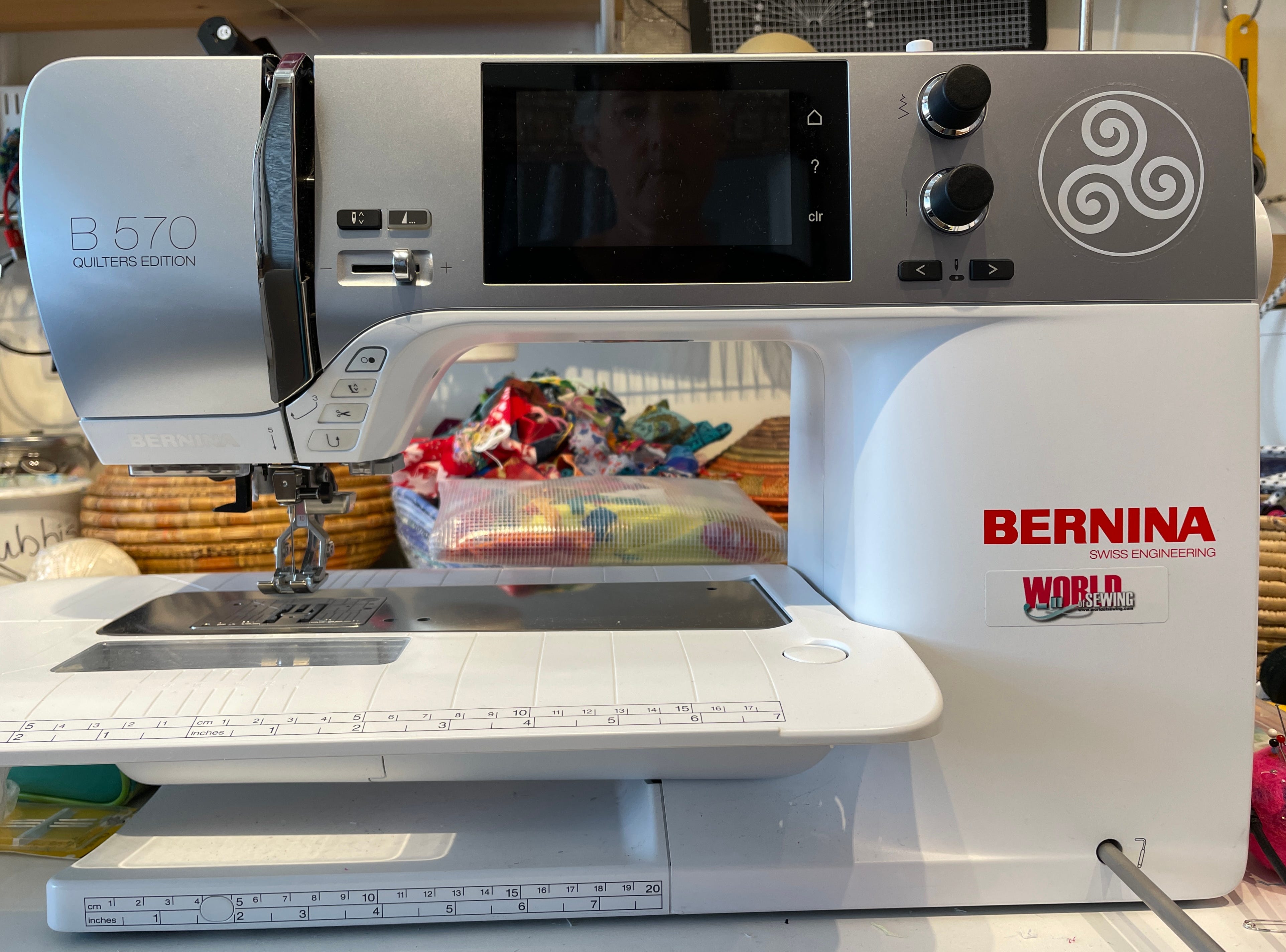
This is how they get you
Despite test-driving the beast, it was only once I started using it ‘for real’ that it dawned on me…in upgrading, I’ve also lost something as basic as a presser foot lever. What genius decided this wasn’t essential?! I can use the knee lifter for a temporary raise, press a button on the machine head (a fiddle to locate so I often press the wrong one, thereby accidentally cutting the thread or raising the needle) or press the ‘cut’ button, which knots and cuts and raises the foot and keeps it up, after much whirring and buzzing – it really makes a meal of it. What’s so hard about a little lever?!
On the plus side, I now use a knee lifter all the time instead of shoving it in the back of the cupboard, which I’d done for years previously.
Machine Seven
Machine Six is of course far too heavy to ever leave my desk, let alone the house. So I reluctantly parted with deceased Machine Three (kept in hope of resurrection), added in the little and limited Machine Four as part-exchange, and purchased another updated model: a reduced version of Machine Six. Still an excellent machine, it’s smaller and lighter for taking out and about. And then lockdown happened, and I stopped going out and about. SIGH.
I’ve kept it, as it’s a good machine my daughter can use on the dining room table when she’s home, I can take it out to my social stitching group, and more recently I have been known to teach the occasional workshop away from home. Bonus, it uses the same big bobbins as The Beast* above and DOES have a presser foot lever – which of course I forget, as I’ve got used to the whirrs and buzzes of the automatic one on Machine Six and sit there wondering why the foot isn’t lifting when I cut the thread.
Machine Eight
Surely not, Izzy?! Oh yes. We’re not there yet.
Just before lockdown, one of the last workshops I taught, before everything was cancelled, was exploring the different effects you could create by altering the tension. Fun and easy enough to do, once you know how…and if you have a machine that lets you.
Turns out, if you have a super-whizzy computerised machine that does everything for you, it does everything for you…
…including altering the tension to AVOID the very effect you’re trying to CREATE. I was stunned. Despite trying all the tricks up my sleeve, both Machine Six and Machine Seven resolutely refuse to stitch anything more interesting than a slightly raised line. Disaster!
Luckily, after a frantic search of the interwebs and my local stockist, I managed to purchase – by the skin of my teeth – one of the very last classic, mechanical machines made by Bernina. No electronic wizardry to ‘correct’ things, it stitches the most fabulous textured whip, moss and feather stitch. It’s simple but robust, will probably outlast the others, I’m never ever going to sell it, and I’m not alone in mourning the loss of this model. It’s the one previously used by schools and colleges, precisely because it is so robust.
I was told it was phased out because the cast used to create the body had reached the end of its life. Each time a cast is used to manufacture a machine, tiny imperfections form, so eventually, after number of years, it’s unusable. Not sure whether that’s the true reason, or if it was just a general shift towards the pricier electronic machines. Either way, I bet I’ll still be using it long after Machine Six and Seven have gone the way of Machine Three.
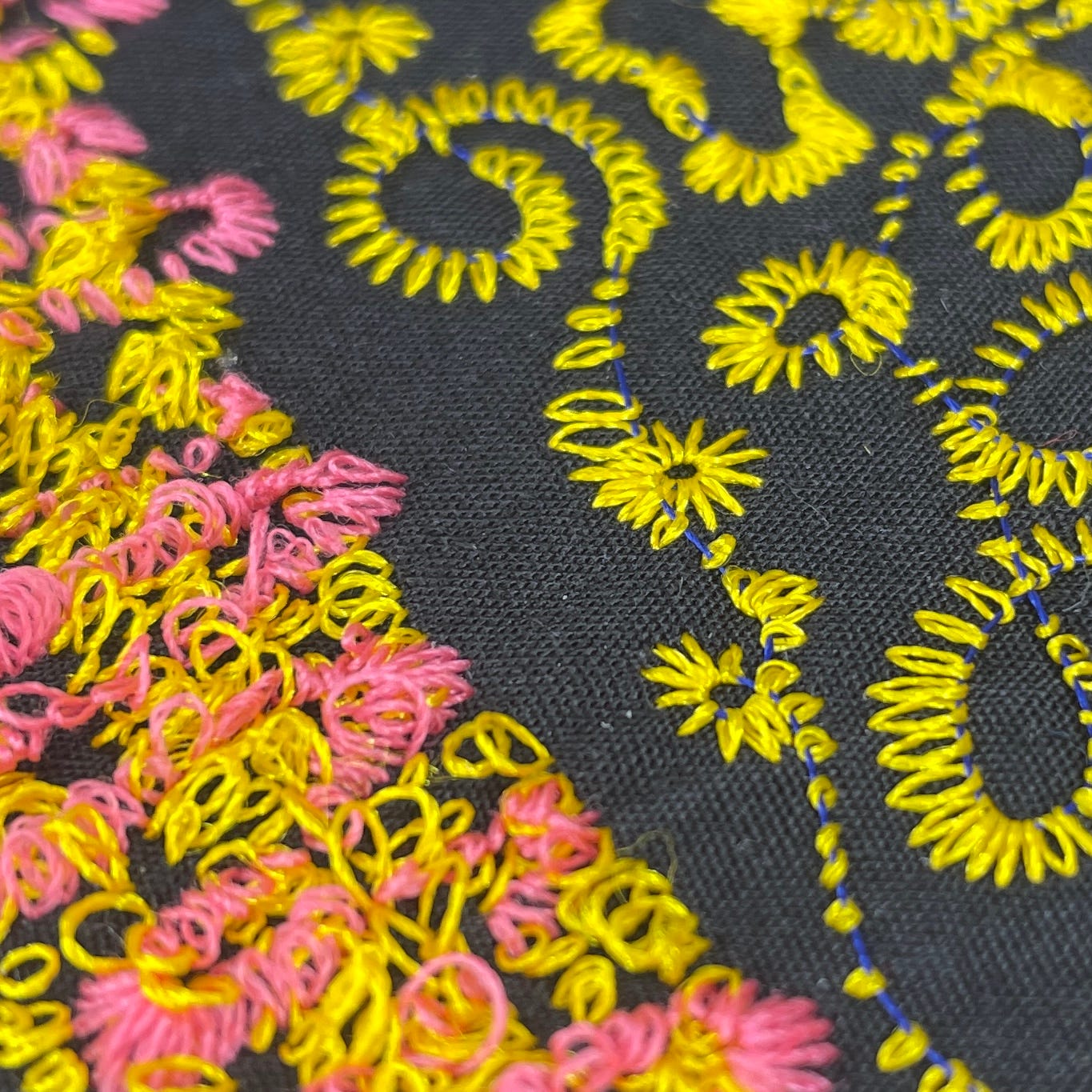
Machine Nine
Sucker that I am, a few years ago I couldn’t resist purchasing a hand-cranked black’n’gold Singer from our local haberdashery. It was beautiful. One previous owner, who’d had it since 1912. I mean, what’s not to like?! I justified it by claiming it was ‘one to use when the lights go out’. Ultimately, I’ve conceded it’s like the vintage Bernina, surplus to requirements, just for show, never to be used. It also had a shuttle not a round bobbin, so didn’t hold much thread. At all. In a rare moment of rationality, I gave it away.
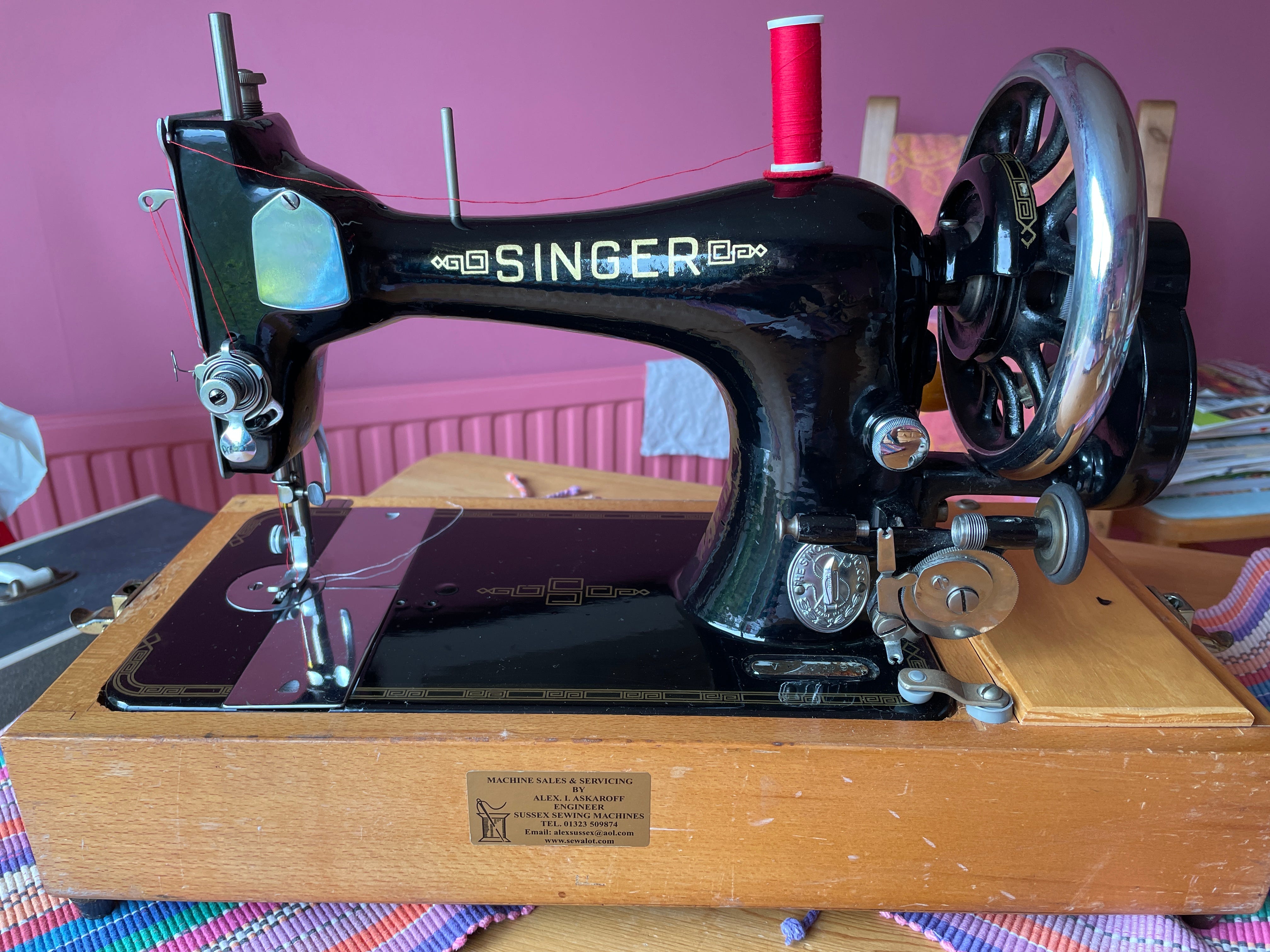

In another rare moment of rationality and sense, I’m going to end this post here and continue next time.
Will there be a Machine Ten? Is there ever an answer to the conundrum of the perfect machine?!
Until next time when we’ll find out!

* If you read last week’s post and comments, you may have seen me say I don’t name my machines. But I’ve changed my mind - The Beast it is!

Threadnoodle is always free for everyone to read, but subscribing helps motivate me to keep creating, writing and sharing! Thank you 🙂
If you’d like to support me a little more, you can always buy me a coffee - that’d be more than lovely too 😊
I started sewing on my mother's hand singer, and then she upgraded to an Elna. I was given a teeny tiny Elna as an 18th birthday present, which I loved. Did so much sewing for friends at university and it lasted me for 30 years. Only when my daughter did textiles a level did I upgrade to a Bernina (sorry Marilyn) and I love it. I looked at new machines (all sorts) at the knitting and stitching show last year and could not believe how expensive they are. They seem to do so many things I don't need ....but there was definitely a element of 'want' ...just in case it might do some new wonderful things I'd only dreamed of. Dream on ...
Ha! Love it! Just out of curiosity, how many bikes does your husband have?!