

Joining the dots
… around cultural appropriation versus finding your own style

A dose of inspiration
Last week or was it the week before I finally managed to get to London to see the Emily Kngwarray exhibition. Oh my.
I’ve seen a fair few big exhibitions at the Tate but this one I would’ve been happy to live inside.
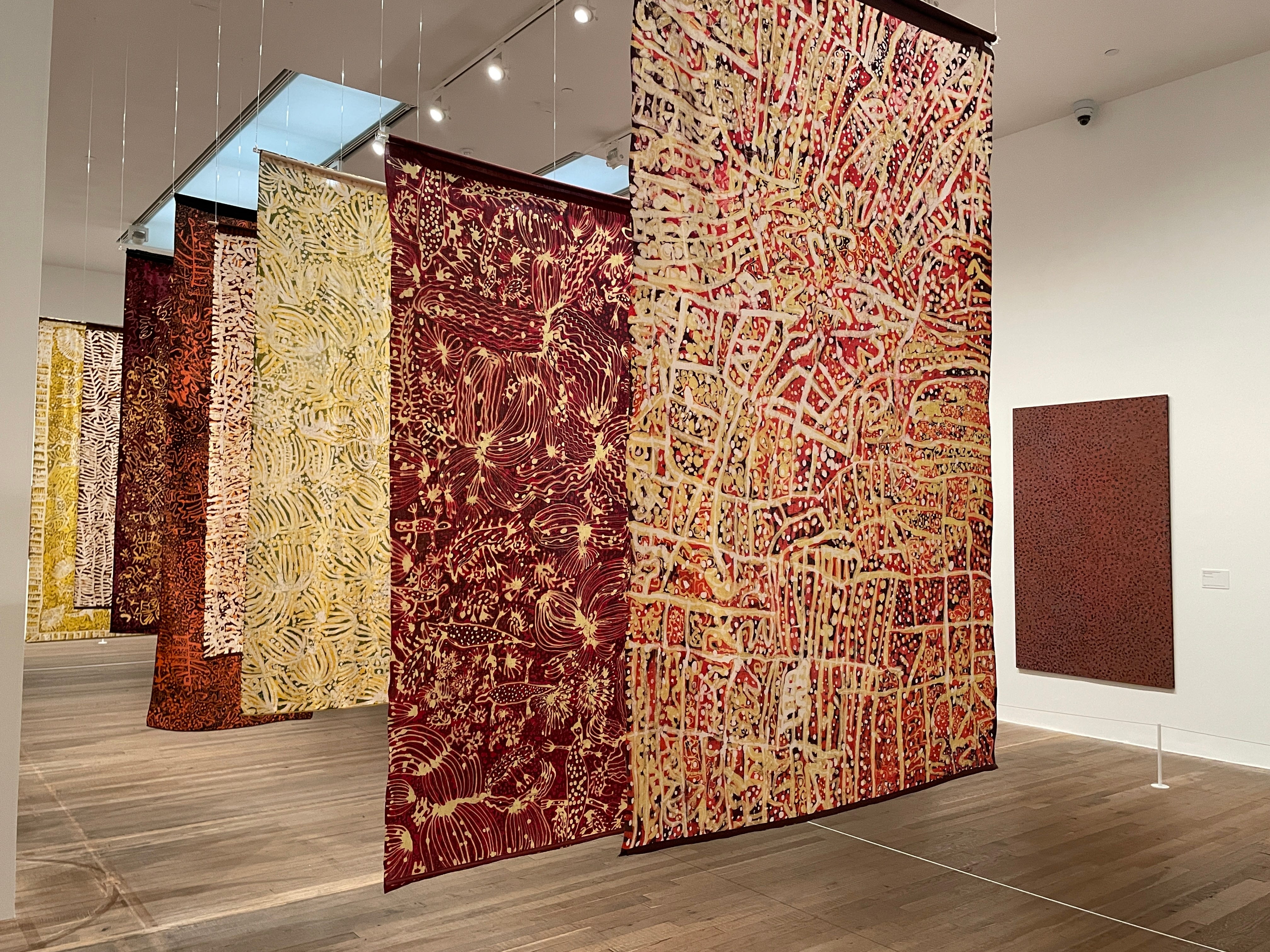
It spoke to me.
It wasn’t necessarily the colours, as most of the paintings are not in my favourite colours.
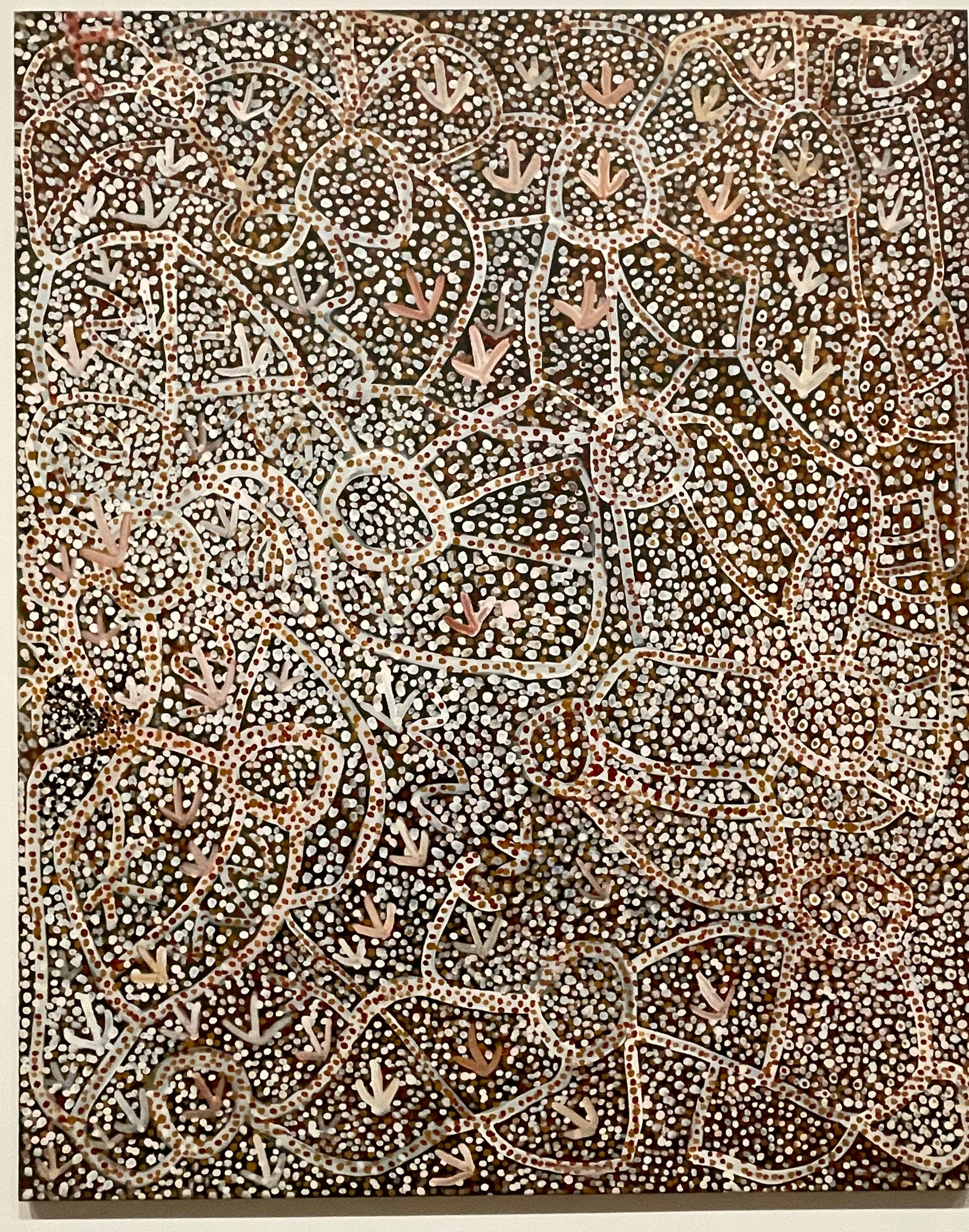
It wasn’t just the scale (although that was breathtaking). It was more the feeling and the meaning within the paintings and batiks - specifically, the layers of meaning. Stories enmeshed in the layers of colours, marks and symbolism. The hot, arid landscapes overlaid with culture, history, tradition, ritual. The people. The vastness of it all. All of it together is what makes it so jaw-droppingly awesome.
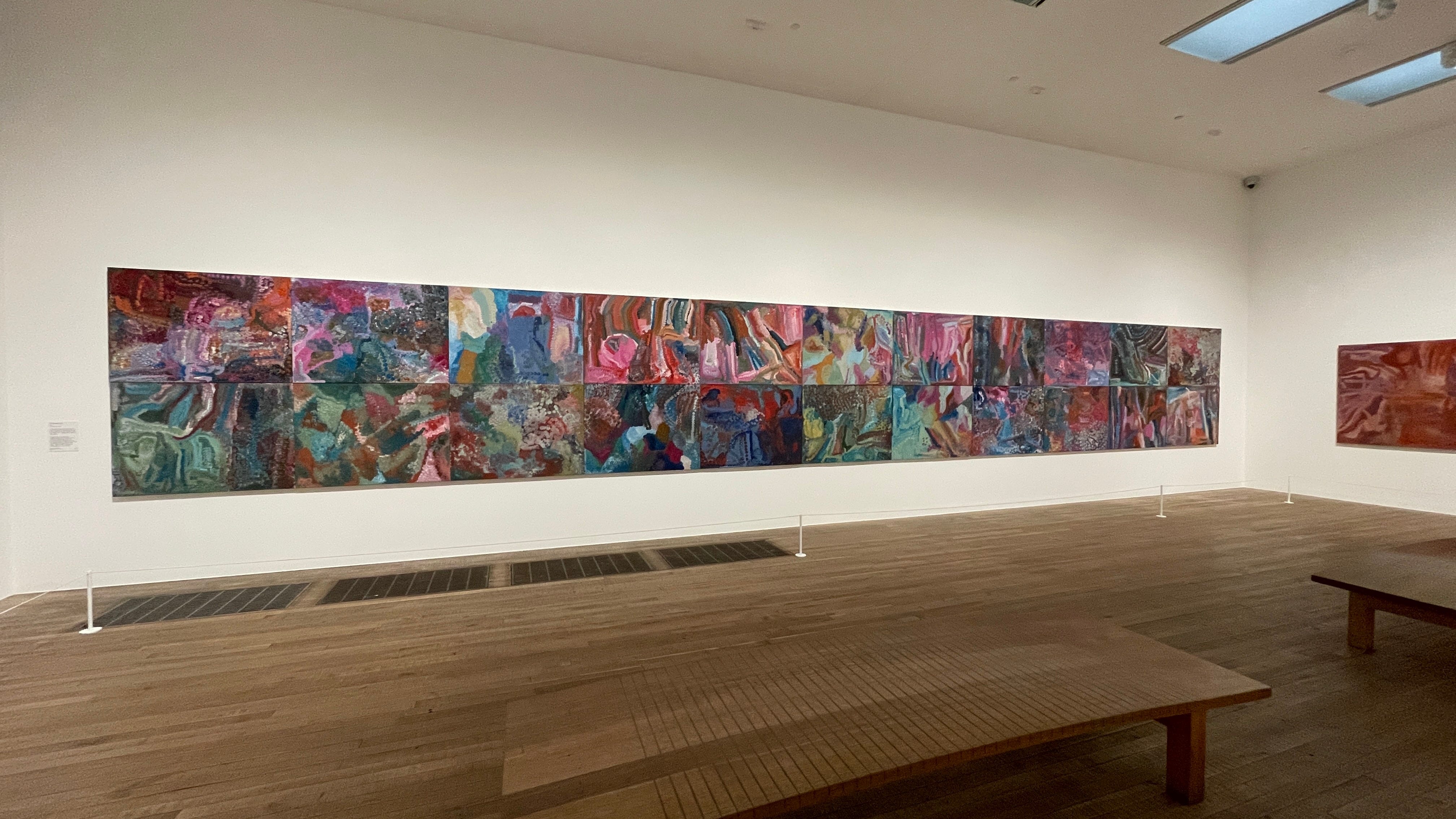
I’ve never been lucky enough to visit Australia so the landscape and environment, the earth, creatures, vegetation and their raw marks and colours are totally out of my sphere of experience. Yet I didn’t have to be familiar with it to feel immersed in it because Emily’s paintings describe it so well - and so much more besides: the paintings are all deeply autobiographical, describing not only her home but her whole life.
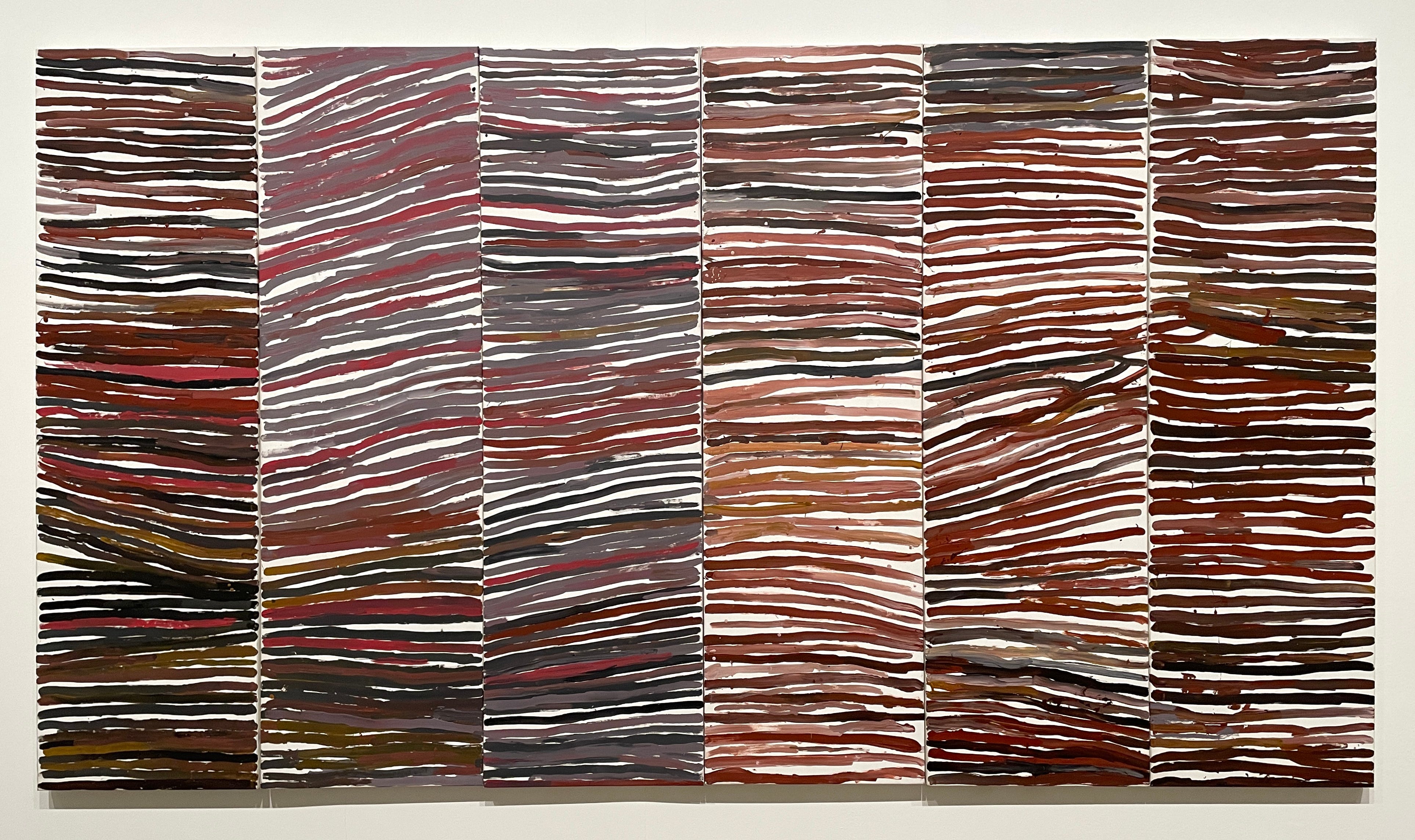
In 1993, Kngwarray started painting bold lines on canvas and paper, beginning a new and prolific period of image-making... The power of these works comes from the energy of her repeated lines and brushstrokes. Some people have interpreted these paintings as representing designs painted on the body for awely (women’s ceremonies).
Tate Modern
Going a bit dotty
A defining feature of many paintings by Emily Kngwarray and other Australian Aboriginal artists is, of course, the dots
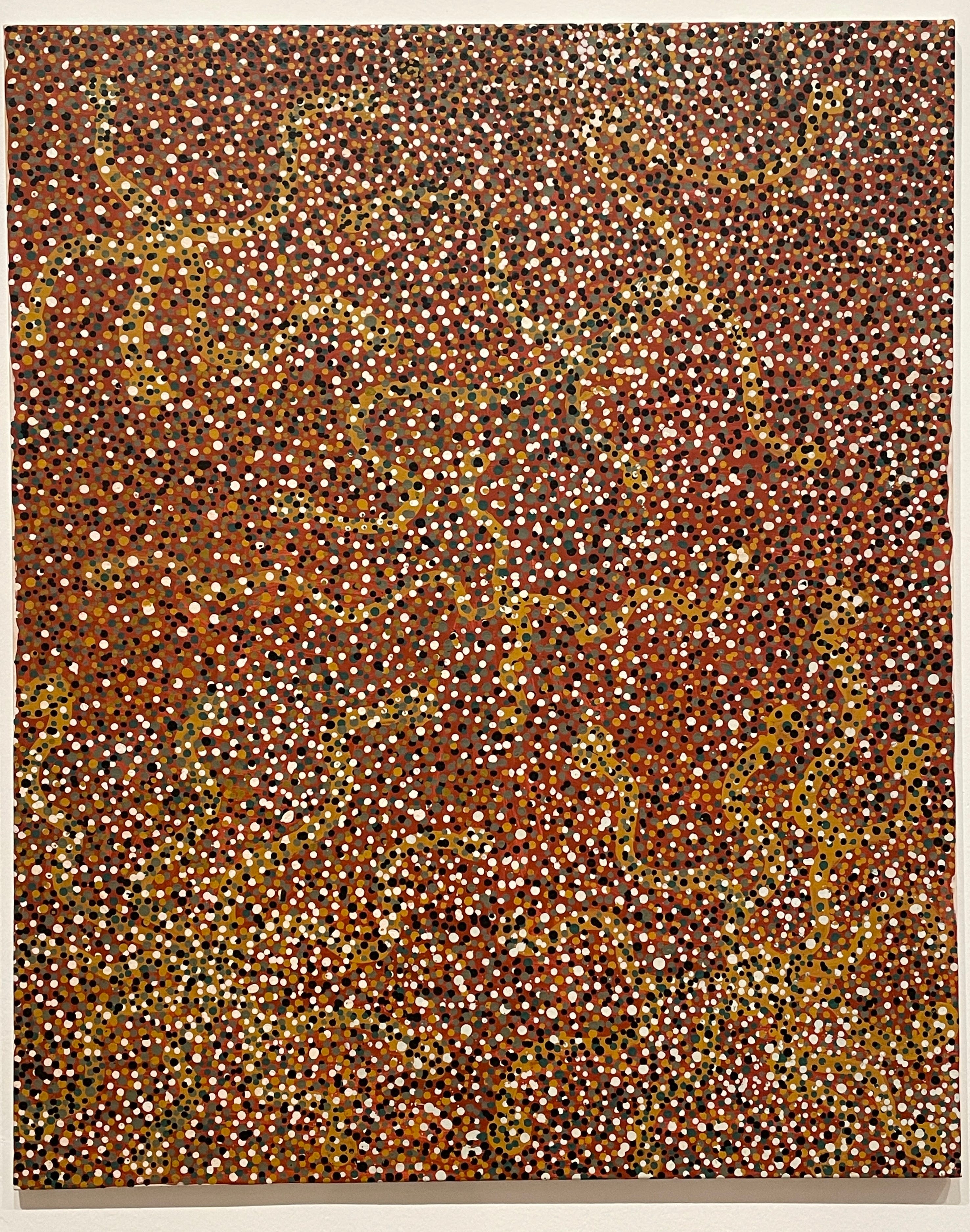
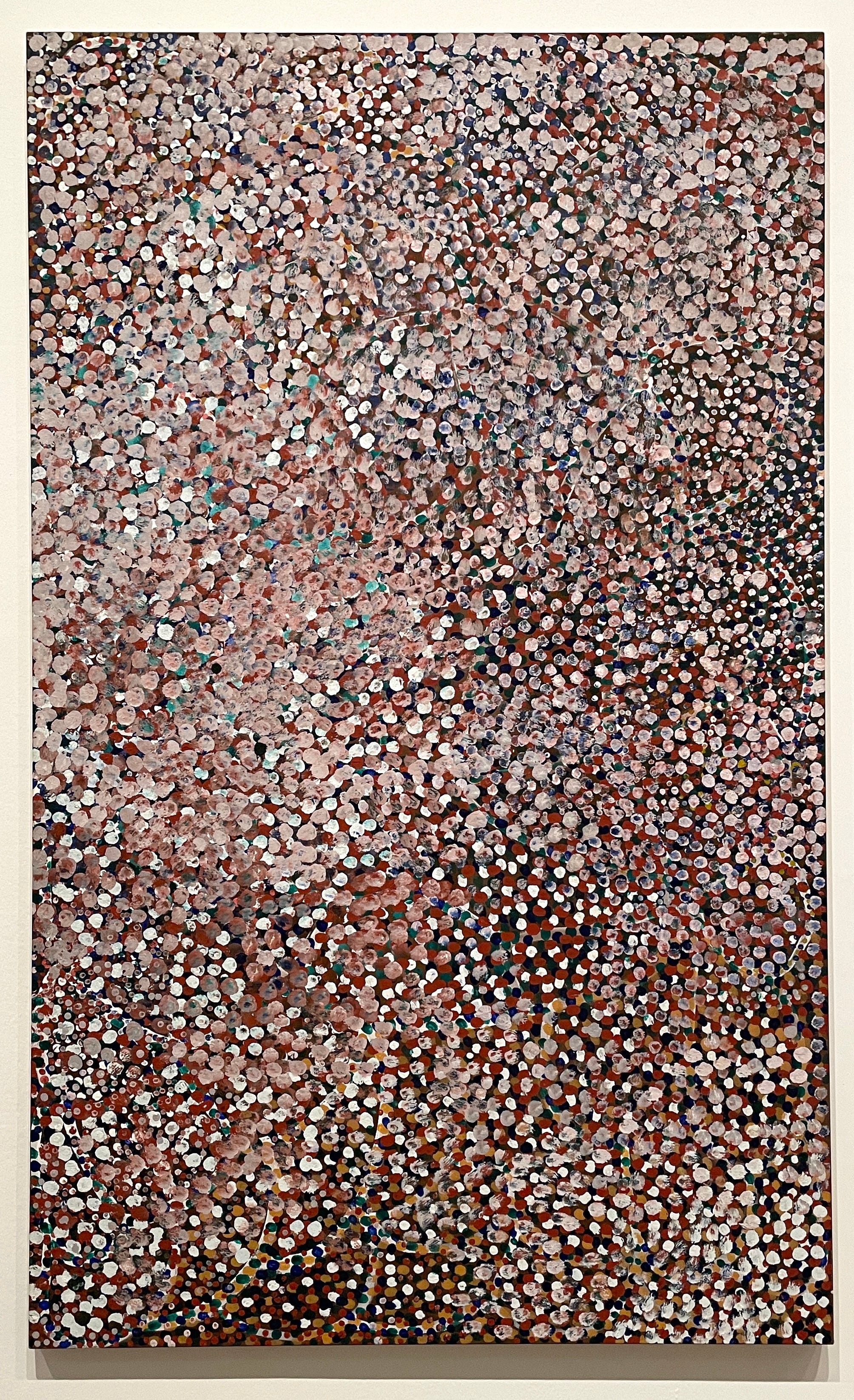
And we all love a dot, don’t we?!

After seeing an exhibition like this it’s perhaps not so strange to discover a sudden urge to make your own dotty paintings.
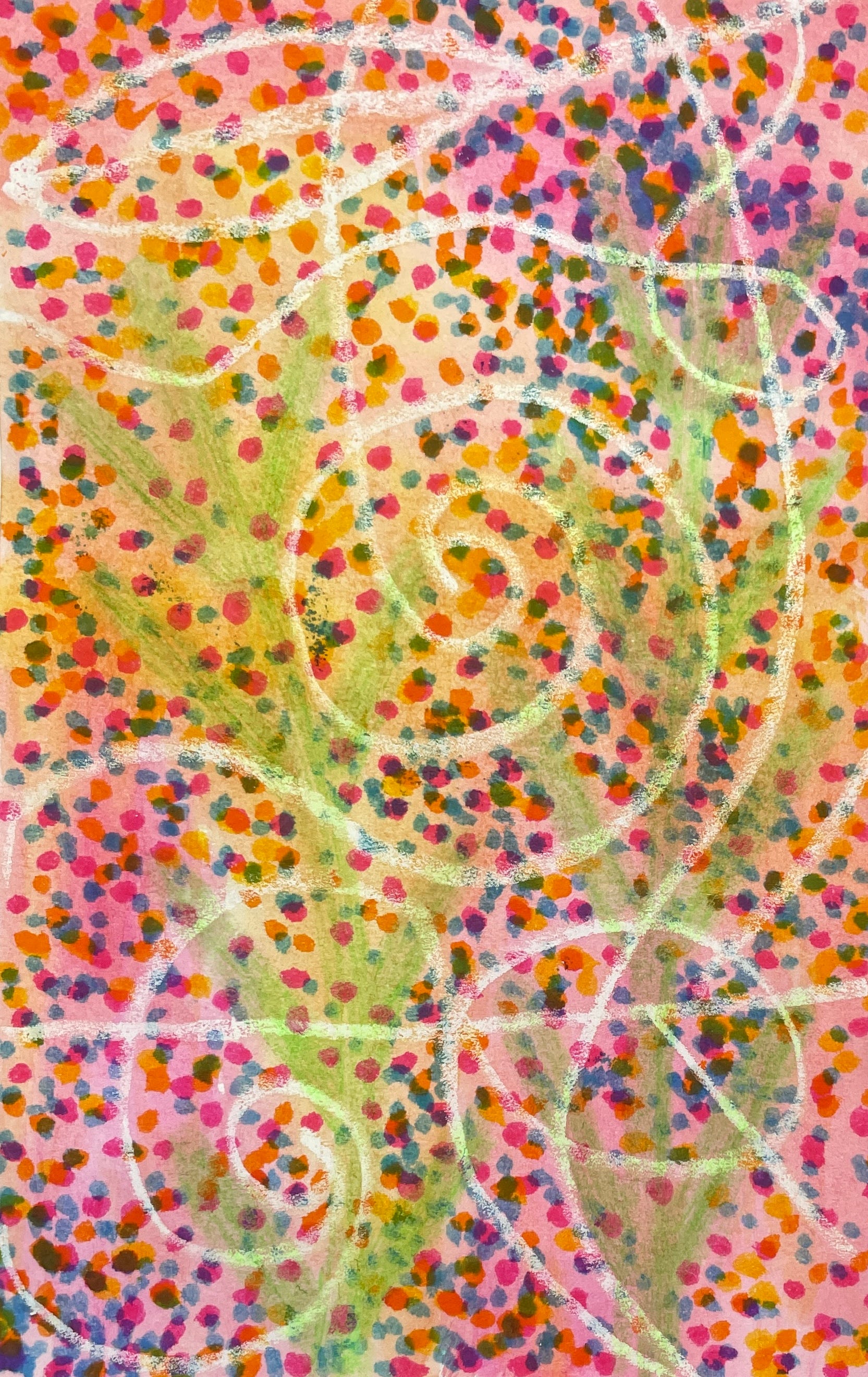
But before we get carried away, let’s rein in that impulse and consider things a little deeper. Because on the one hand, you could say “imitation is the sincerest form of flattery” except the full quote is actually
“Imitation is the sincerest form of flattery that mediocrity can pay to greatness”
Oscar Wilde
Oof…
And also - cultural appropriation.
For a start, the dots are part of a distinct visual language with a very specific cultural purpose. That’s Very Good Reason No. 1 why we can’t just start painting dots on everything because we think they ‘look nice’.
Read more about the origin and meaning of the dot paintings here.
Secondly, Emily’s paintings are about Emily and I’m not Emily. I’m a 50-something white Brit living in a non descript town in south east England. Emily’s world is not my world and by extension, Emily’s art and style can never be mine. Most importantly, Emily’s art isn’t about style - it’s not even about art. Emily’s art IS Emily.
The works were visual reminders of their own being. They painted land that they belonged to and the stories that are associated with those sites. In essence they were painting their identity onto the boards, as a visual assertion of their identity and origins.
Like copying artworks made by Native American and First Nations artists, it’s never ever OK to benefit and/or profit from a style when the originating culture is marginalised or not credited, as is so often the case. Appropriation hits hardest when the original artists fight for visibility, resources, and recognition. And as mentioned above, the original works and their sacred meanings are inextricably linked.
Borrow principles, not patterns
So rather than wring my hands wondering whether it’s ok to make art in the style of Emily Kngwarray (easy answer: no) more interesting questions to ponder are
Where is MY home? What makes it so?
Where are MY landscapes?
What are MY unique, personal symbols?
Which are MY colours?
What are MY rituals, my traditions?
Who are MY people?
What is actually uniquely ME?
The quest then becomes finding ways to create art that encapsulates all the things that make up the whole of ME. Representing some of these things might include dots and stripes, meandering lines and branching patterns - and might not, but I won’t know until I start to explore these questions and find my own truth.
I can borrow some of Emily’s methods in my explorations - use my hands, use blunt sticks and bright blobs of colour, perhaps. But I can’t ‘borrow’ meanings.
I can borrow visual ideas, auch as layering colours and marks and patterns - but definitely not personal or cultural symbols.

My truth
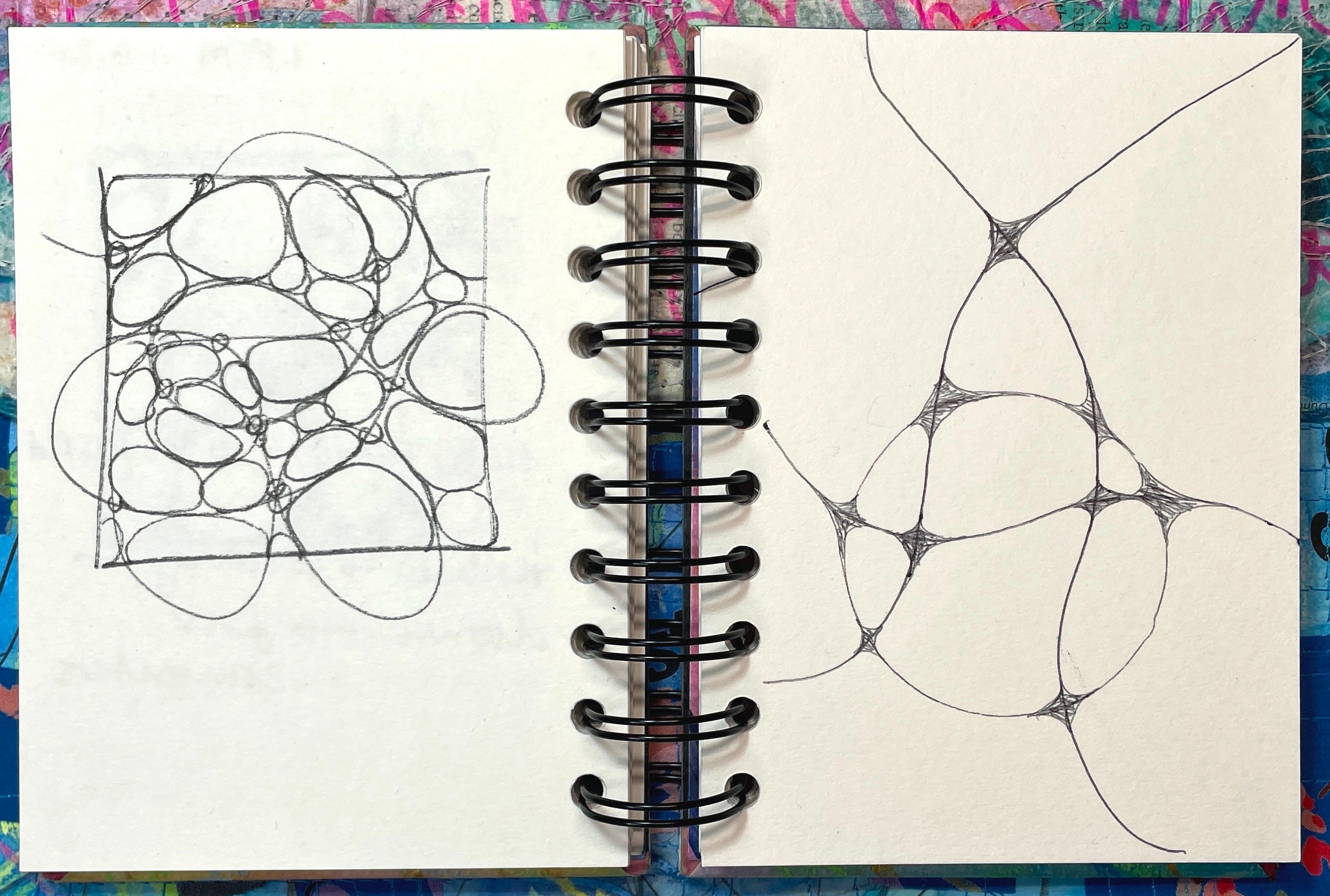
While pondering all these things, I’ve been experimenting with layering, taking ideas from some neurographic doodles I did last year and attempting them in stitch. It’s not speaking to me yet, but you don’t know until you try, so I’m plugging on.
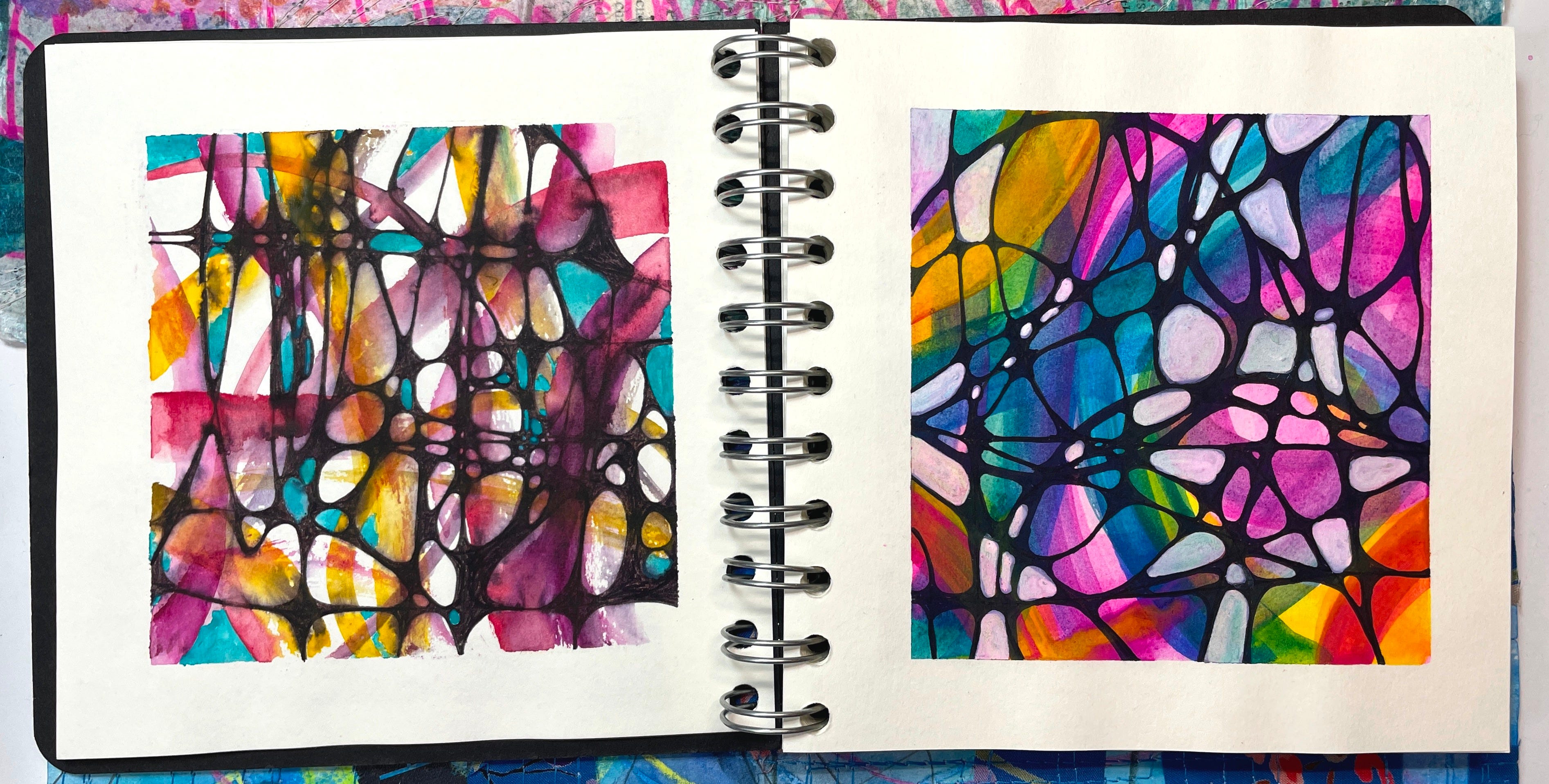
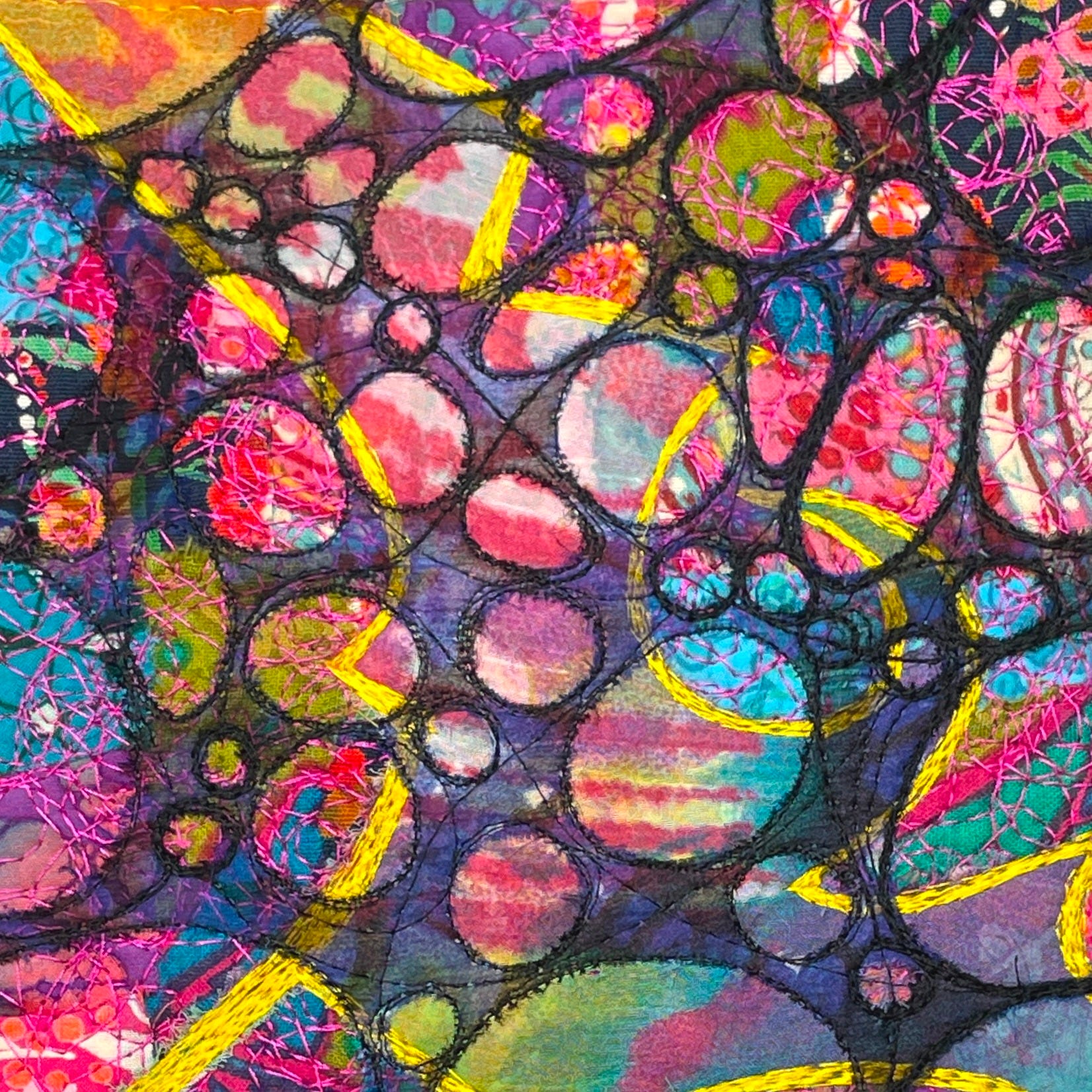
I also had reason to dig out a lot of my older pieces of work last week, and it was interesting to see the layering in these pieces, and spot more of my own visual language. Literally, the words - whether scribbled, hidden or collaged.
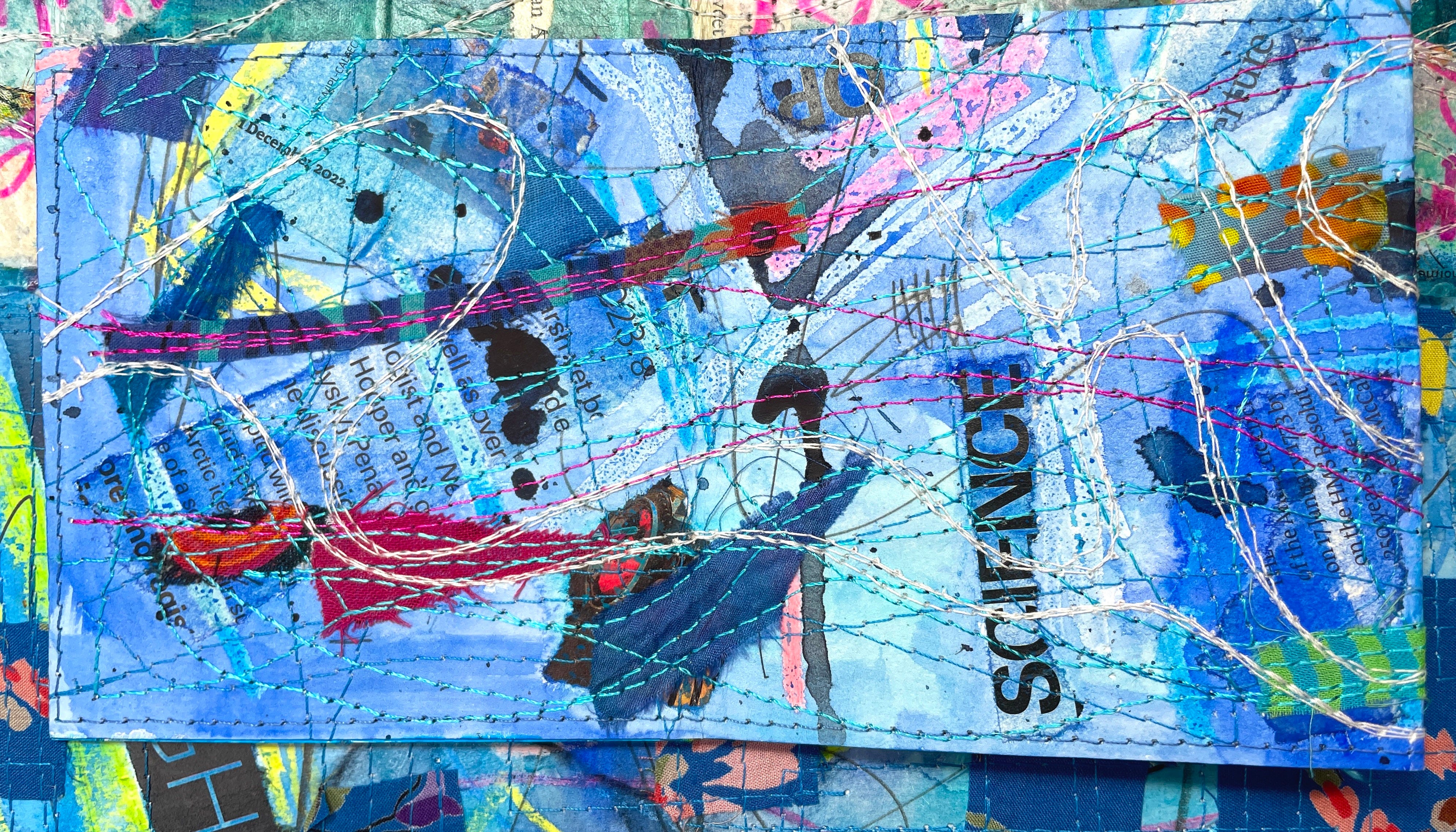
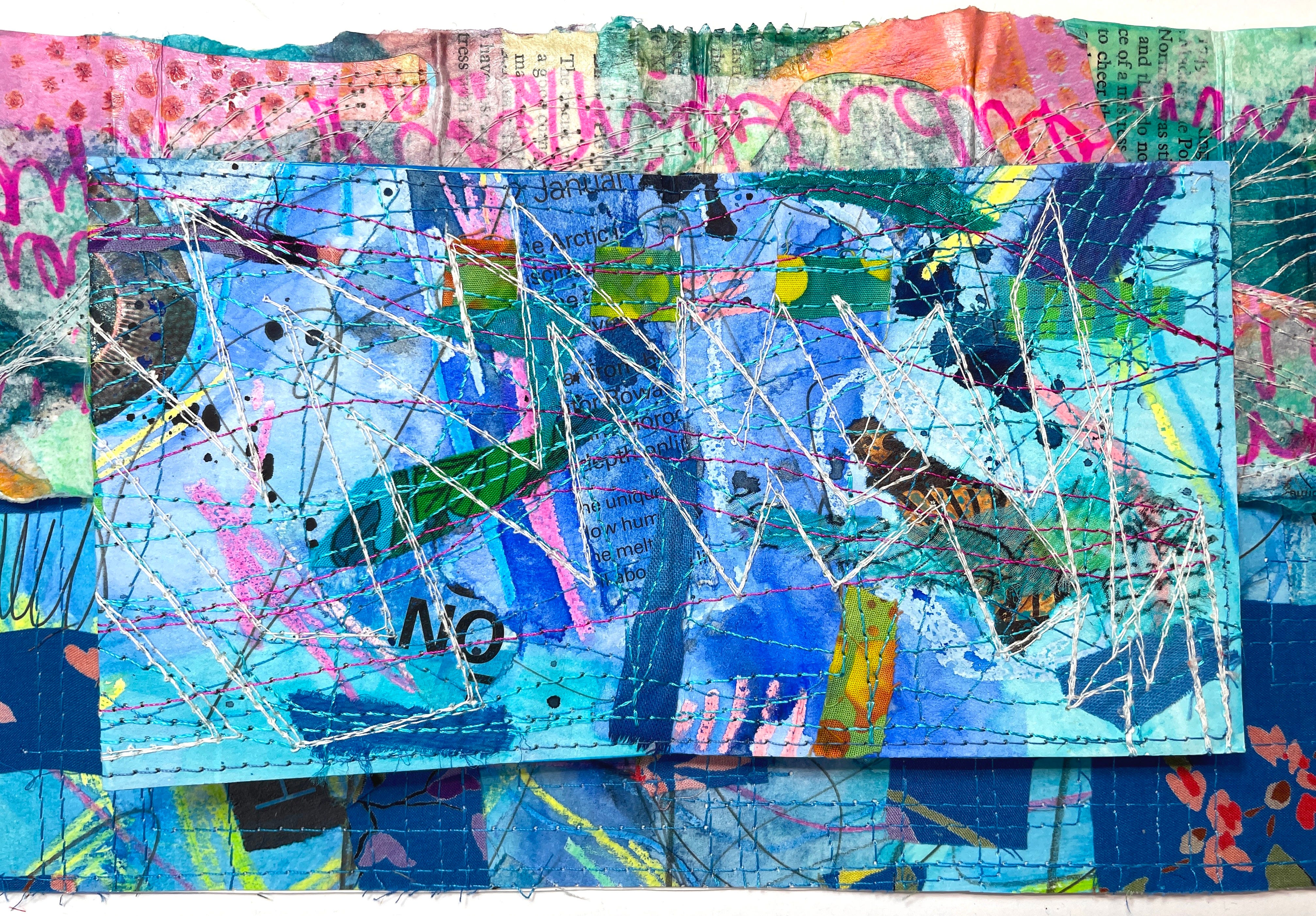
Have you found your visual language? What’s your truth?

Until next time,
Click here to read more about Emily Kngwarray’s life and art
Some sources say she was born 1910, others say 1914 - either way, she died in 1996. She only started painting in her 70s, and was most prolific in the last three years of her life. Now THAT’S inspiring!


Threadnoodle is and always will be free to read without a paywall - subscribe here. It’s a lovely way to support me - and receive my posts in your inbox or Substack app!
If you’d like to support me a little more, you can always buy me a coffee - that’d be more than lovely too 😊
I've been lucky enough to visit Australia three times, including the red centre and see wonderful exhibitions of aboriginal art. I really resonate with their ideas of painting the energy patterns they sense in the earth etc but as you say, so helpfully, what would that look like for me, in West Yorkshire?
What a great post! Thank you. Borrow principles, not patterns was particularly helpful.